Daiei Gothic: Japanese Ghost Stories
directed by Satsuo Yamamoto, Kenji Misumi, Tokuzō Tanaka
starring Shiho Fujimura, Kazuo Hasegawa
Radiance Films
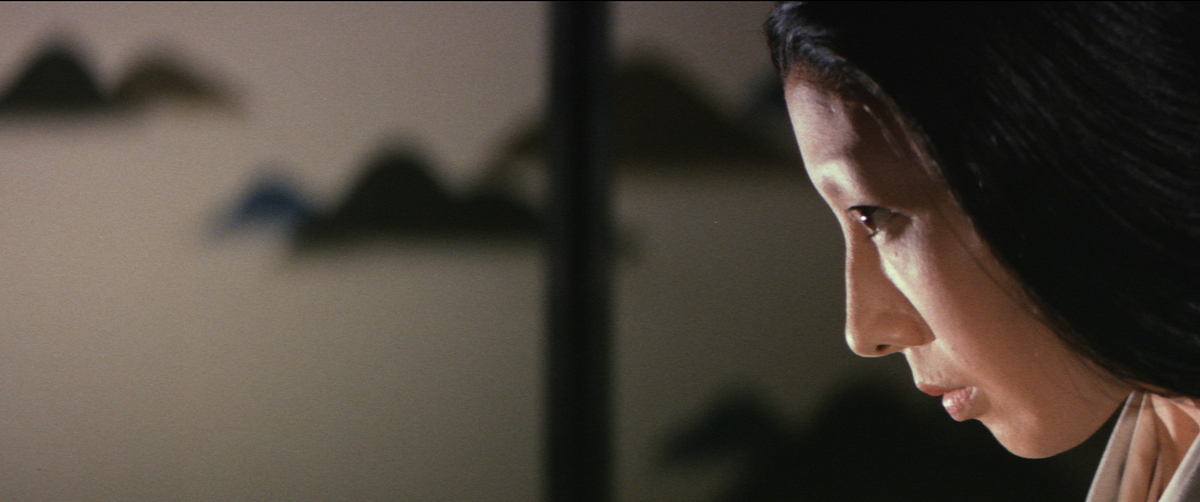
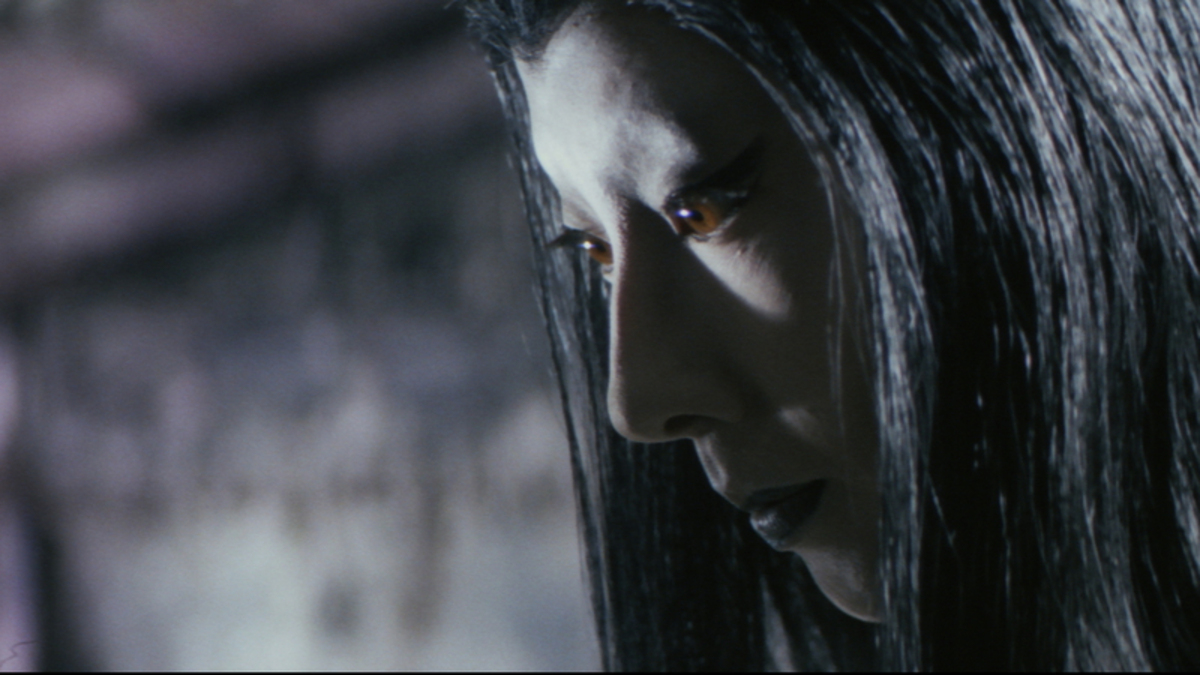
Although they may seem novel to American audiences, the stories in the films of the Daiei Gothic: Japanese Ghost Stories Blu-ray box set would have been very familiar to Japanese audiences. These stories of Oiwa, Okiku, and Yuki-onna have been told and retold in literature, art, theatre, and film for centuries. Daiei Films adapted these folk stories into film with The Ghost of Yotsuya (Oiwa, 1959), The Bride from Hades (Okiku, 1968), and The Snow Woman (Yuki-onna, 1968). This trio of films have been released in a lovely three-disc Blu-ray set from Radiance Films, featuring stunning transfers of the films and a nice complement of extras.
• •
The Ghost of Yotsuya
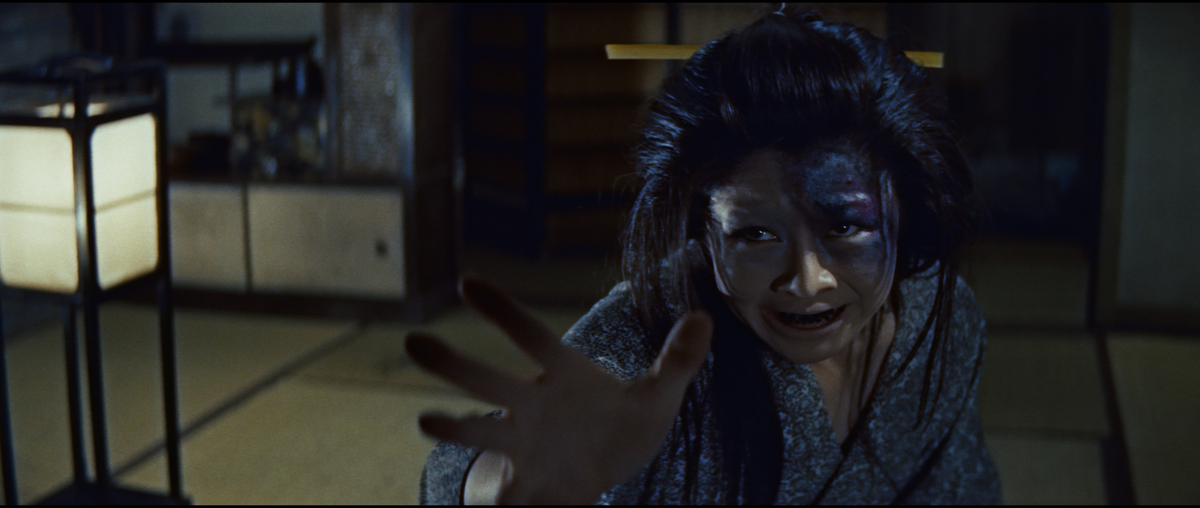
A shiftless, out of work samurai, Iemon spends his time making umbrellas and lanterns between fishing trips, while his wife, Oiwa, wants her fancier life back. After getting into an altercation with some petty crooks, Iemon gets drawn into a plot that would see him marry a rich crime lord’s daughter. Of course, in order for this arrangement to happen, Oiwa has to be taken out of the picture. Oiwa is framed as an adulteress, poisoned, and her body thrown into the river with the poor sap set up as her lover. When Oiwa’s clothes from her corpse are accidently dropped off at their house by someone wanting the clothes mended, to be resold, her spirit returns to exact a terrible revenge on all those responsible for her demise.
The Ghost of Yotsuya is a classic tragedy with Iemon coming off as a fairly sympathetic, if horrifically clueless, character. Iemon isn’t the instigator of his troubles, but once in the com, he readily believes the rumors about his wife and is far too willing to get into a relationship with a younger woman. While his wife suffers terribly in order for some stupid and petty men to live an easy life of drinking and carousing. The poison that Oiwa is given causes her face to be disfigured by horrible, painful boils, the sight of which drives her mad before she dies. He ghost is also a terrifying visage, first manifesting out of the washtub containing her kimono she died in, ghostly hands reaching up out of the dark water. The plot gets a little convoluted but the finale as she lays waste to those who wronged her is a banger.
• •
The Bride from Hades
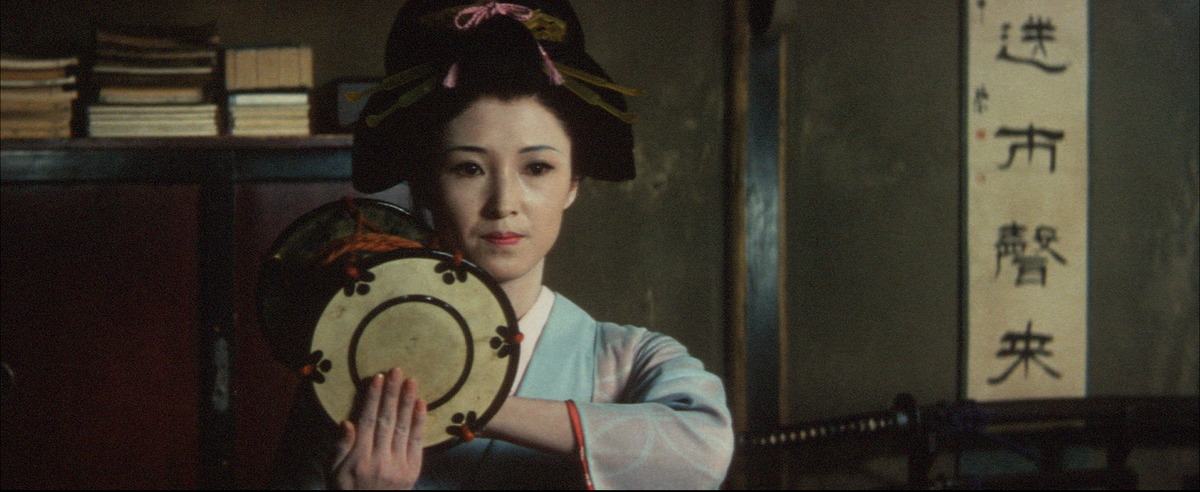
At the beginning of the Obon festival, the kind and noble Shinzaburo meets a beautiful young woman, Otsuyu, and her servant while helping dislodge some spirit lanterns that got stuck in the reeds. Later Otsuyu shows up at Shinzaburo’s home to thank him for his kindness earlier, and she recounts her story of being forced into working in a Geisha house and her desperation to maintain her virtue. She and Shinzaburo decide to spend the remaining nights of Oban together before she must return to her fate. Of course, Otsuyu is the ghost of a young Geisha who committed suicide. The people in the town become concerned about their beloved Shinzaburo and attempt to help him stave off what is obviously a supernatural visitor, but their efforts are in vain, as they arrive the morning after Oban to find Shinzaburo dead in the arms of Otsuyu’s skeleton.
The Otsuyu story has been told in various forms in countless movies. The “guy falls in love with a ghost” trope is so omnipresent that it can be difficult to remember its origins, but director Satsuo Yamamoto, who is best known for historical dramas, classes things up considerably. His intricate attention to authentic period details and the delicate and beautiful cinematography really elevate The Bride from Hades.
The Snow Woman
A master sculptor and his apprentice, Yosaku, are searching for the perfect tree to use to sculpt a new statue of Kannon, the Buddhist Goddess of Mercy. Having selected the tree, the pair get caught in a blizzard and are forced to take refuge in a barn. As the wind and snow howl, a mysterious woman, the mythical snow woman Yuki-Onna, enters and kills the sculptor. She spares the life of Yosaku because he is “so young and beautiful,” but only on the condition that he never speak of her or the events that he witnessed to anyone, or she will kill him. He swears his silence and returns home. When Yosaku’s mother brings a young woman, Yuki, into their home out of a rainstorm, Yosaku is immediately smitten and the two soon fall in love and have a child together. Yosaku is tasked to fulfill his master’s contract for the Kannon statue, and he finds inspiration for his work in his beautiful wife, who we all know is actually Yuki-Onna. Yuki finds it increasingly difficult to hide her true self, and the pressure to finish his statue mixed with concern for his apparently ailing wife leads Yosaku to break his vow and tell Yuki about his encounter with The Snow Woman. Yuki then reveals her true form, but in an act of mercy, she spares his life a second time for their child, but leaves and disappears back into the snowy night.
The Yuki-Onna story taken from Lafcadio Hearn’s Japanese fairy tale collection Kwaidan: Stories and Studies of Strange Things has been retold or referenced throughout Japanese pop culture, most notably in Masaki Kobayashi’s film Kwaidan (1965). As great as Kobayashi’s film is, moreso is the performance of Shiho Fujimura. Yuki is a woman living in fear of herself while also being viewed, by her husband, as the ideal woman, the very inspiration for the goddess of compassion. The dualism of the character is fascinating, especially when you consider it is based on a short fable of less than 1500 words. You fear Yosuku’s inevitable betrayal of his vow, not because of what will happen to him, but for what Yuki will be forced to do. There was little to work with, but Shiho Fujimura gave her version of Yuki-Onna a rich and captivating character.